NASA’s Quantum Lab Aboard Space Station Gets Chilly Upgrade
- News
- April 5, 2026
- 12
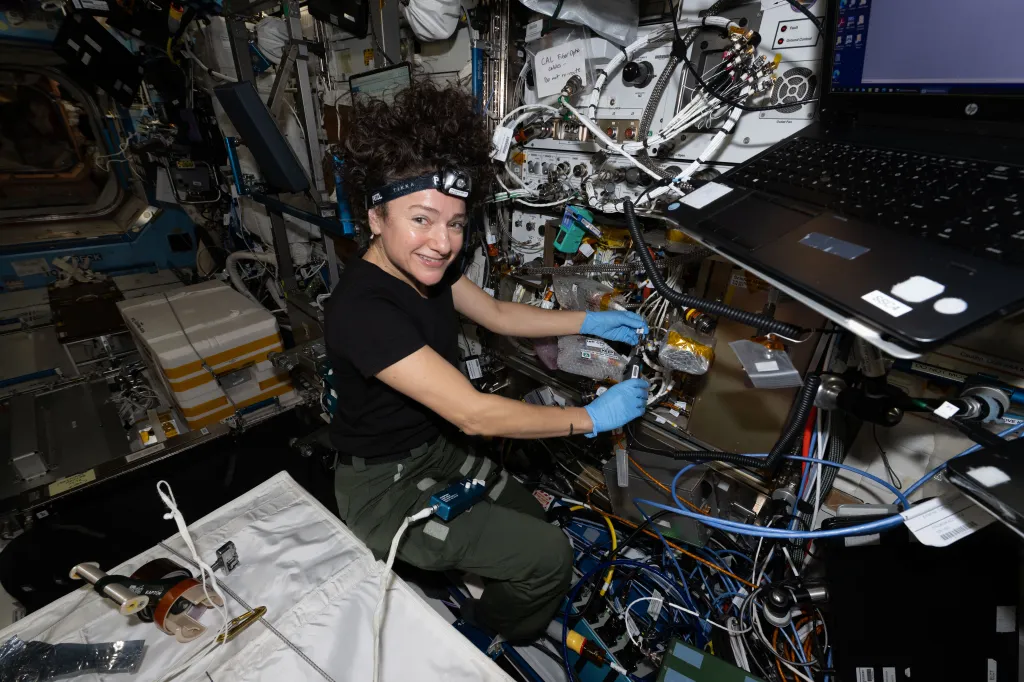
Astronauts aboard the International Space Station have activated Cold Atom Lab, a uniquely advanced research facility designed to deepen understanding of quantum physics and enable new types of quantum technologies. The upgraded system operates in microgravity, allowing scientists to perform experiments that cannot be replicated on Earth.
Quantum science explores the behavior of matter at the smallest scales — atoms, electrons, and photons. At this level, particles no longer behave like simple “billiard balls.” Instead, they exhibit wave-like properties, can exist in multiple states simultaneously, and may even behave as though they pass through one another.
Roughly the size of a minifridge, the Cold Atom Lab is controlled from Earth and cools atoms to temperatures below minus 459°F (minus 237°C), just above absolute zero. At these extreme conditions, atoms form a Bose–Einstein condensate (BEC) — a rare state of matter where particles act as a single quantum wave. In microgravity, these quantum waves can expand and persist longer than on Earth, enabling more precise experiments.
“Matter behaves drastically different”
“At the coldest temperatures, matter behaves drastically different from anything we have experienced,” said Jason Williams, project scientist for the Cold Atom Lab at NASA Jet Propulsion Laboratory. “The wave-like nature of matter dominates, and ultracold matter can behave in unexpected ways that enable extremely precise measurements of time, gravity, and motion.”
The facility supports multiple international research teams studying fundamental physics and also tests quantum technologies that could one day be used in space exploration and Earth-based applications.
How the system works
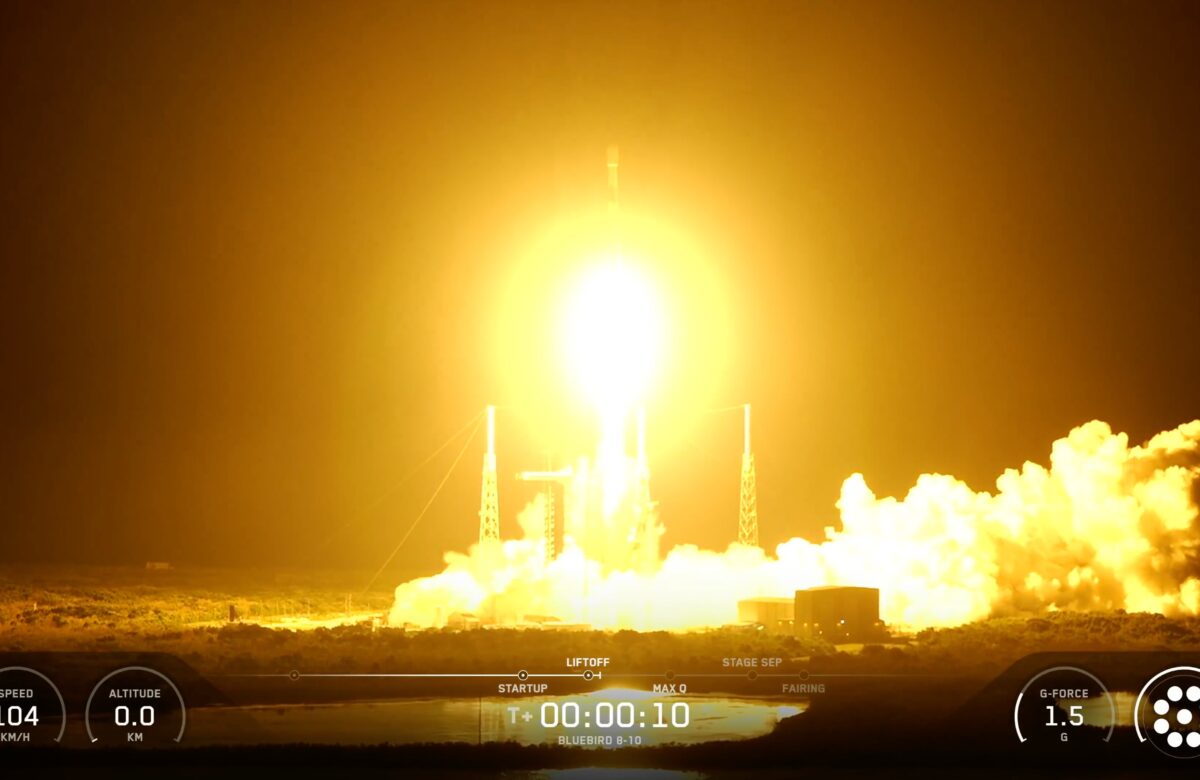
At the core of the Cold Atom Lab is its science module, recently upgraded and delivered to the International Space Station via a Commercial Resupply Services mission.
The process begins by heating rubidium or potassium to around 750°F (400°C), creating a gas inside a vacuum chamber. Scientists then use precisely tuned lasers to cool the gas by slowing its atoms down. Once cooled, magnetic traps hold the atoms in place while additional techniques reduce their energy further, bringing them extremely close to a complete standstill.
On Earth, similar experiments require large laboratory setups filled with lasers and optical equipment. In orbit, however, the same system fits into a compact rack, benefiting from the unique conditions of microgravity.
Quantum 2.0 in space
“This is the first project to create Bose–Einstein condensates in orbit,” said Ethan Elliott, deputy project scientist for the Cold Atom Lab. “We’re demonstrating that quantum technology can operate reliably in space.”
He added that earlier advances in quantum science enabled technologies like lasers, smartphones, and MRI scanners, while current work — sometimes referred to as “quantum 2.0” — focuses on direct control of large quantum states. The goal is to achieve similar technological breakthroughs through space-based quantum research.
New upgrade expands capabilities
The latest upgrade to the Cold Atom Lab marks its fourth major enhancement since its installation on the space station in 2018. Key improvements include a redesigned magnetic trap that can alter the shape of quantum gas clouds, allowing scientists to study different physical behaviors.
The upgraded system also includes improved metal sources used to generate atom clouds, giving researchers more flexibility in experimental design.
“It’s the closest thing we have to controlling the boundary of the quantum world,” said Kamal Oudrhiri, project manager for the Cold Atom Lab at JPL. “This upgrade pushes that boundary even further.”
Scientific and future impact
The upgrade supports NASA’s broader goal of developing space-based quantum instruments such as matter-wave interferometers, which could be used for:
- Fundamental physics experiments
- Precision navigation and timing systems
- Gravity sensing for Earth, the Moon, and beyond
Managed by Caltech and built by the NASA Jet Propulsion Laboratory, the Cold Atom Lab is funded by NASA’s Science Mission Directorate and represents a key step in advancing quantum research beyond Earth.
To learn more:
NASA Cold Atom Laboratory