Live From the Moon: How Laser Communications Connected the World to NASA’s Artemis 2 Crew
- Research
- May 30, 2026
- 15
The public was able to follow NASA’s Artemis 2 mission around the Moon in near real-time thanks to an advanced laser-based communications system that delivered high-definition video, photographs, and other data between the spacecraft and Earth.
The technology, known as laser communications, or “lasercom,” played a major role in bringing the mission closer to people around the world. By transmitting data using infrared light rather than traditional radio signals, the system enabled astronauts to share high-resolution imagery and video throughout their historic lunar journey.
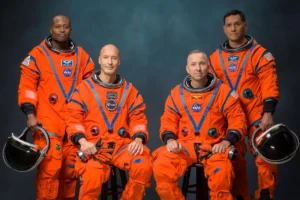
As a result, it felt as though the public was traveling alongside Artemis 2 commander Reid Wiseman, pilot Victor Glover, and mission specialists Christina Koch and Jeremy Hansen during every stage of their voyage around the Moon.
At the center of this capability was the Orion Artemis 2 Optical Communications System, known as O2O, developed by researchers at MIT’s Lincoln Laboratory.
The infrared laser system was capable of transmitting data back to Earth at speeds of up to 260 megabytes per second, exceeding the performance of many home broadband connections. Engineers selected near-infrared light for several important reasons. Unlike some other optical wavelengths, near-infrared signals can penetrate thin cloud cover, reducing the likelihood that weather conditions would interrupt communications. In addition, optical light operates at much higher frequencies than radio waves, allowing significantly larger amounts of information to be transmitted within the same period of time.
“Our goal was to demonstrate O2O’s operational value for human spaceflight by extending the kind of high-bandwidth connectivity that people enjoy on Earth to astronauts operating in deep space,” said Farzana Khatri, lead systems engineer in Lincoln Laboratory’s Optical and Quantum Communications Group. “Not only did we achieve the first use of laser communications on a crewed mission beyond low Earth orbit, but we also enabled unprecedented public engagement through near real-time sharing of multimedia content from the mission.”
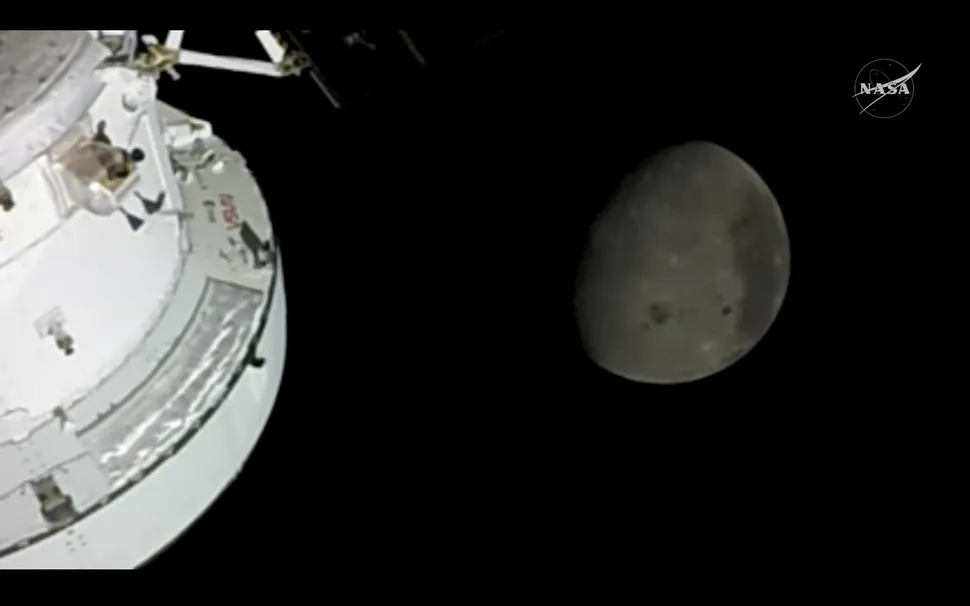
Imagery played a central role throughout Artemis 2. Iconic photographs, including “Hello, World” and “Earthset,” were not simply fortunate snapshots. The crew underwent extensive training at NASA’s Johnson Space Center in Houston to learn how to observe and photograph both Earth and the Moon effectively. The O2O system ensured that the mission’s most compelling images could be transmitted back to Earth and distributed across news platforms and social media within hours of being captured.
The technology behind O2O evolved from an earlier MIT Lincoln Laboratory project called the Modular, Agile, and Scalable Optical Terminal, or MAScOT. That system was delivered to the International Space Station and successfully tested in 2023. MAScOT itself built upon previous laser communication demonstrations, including NASA’s Optical Payload for Lasercom Science (OPALS), which transmitted a 165-megabit video from the International Space Station in 2014.
O2O represents a significant advancement over these earlier systems. The technology consists of three primary components. The first is an optical module equipped with a four-inch telescope and precision gimbals that focus and accurately direct the laser beam. The second is a modem module that converts electronic information into optical signals. The third is a controller module that interfaces directly with the spacecraft and assists with telescope pointing and system management.
During the mission, the laser communications system targeted one of three receiving stations on Earth. The primary facilities included NASA’s White Sands Test Facility in New Mexico and the Jet Propulsion Laboratory’s Table Mountain Facility in California. A third experimental station was located at Mount Stromlo Observatory, operated by the Australian National University.
Mission planners originally expected O2O to operate for approximately one hour per day. However, the system performed so effectively that its usage expanded significantly as the mission progressed. In some cases, NASA flight controllers even adjusted the orientation of the Orion spacecraft to maintain line-of-sight communication with ground stations for longer periods, maximizing data transmission opportunities.
Over the course of the 10-day mission, the O2O system successfully transmitted approximately half a terabyte of data back to Earth.
“O2O was able to downlink all of the information stored on multiple onboard cameras, allowing mission controllers to clear memory cards and continue collecting new imagery and video,” Khatri explained. She also noted that transmitting the data during the mission provided an additional layer of protection.
“For any space mission, scientists and engineers are concerned that data not transmitted during flight could become corrupted or even lost,” she said. “In some cases, retrieving information after a spacecraft returns can take months. The laser communication capabilities of O2O ensured that mission data were preserved and made available for immediate analysis.”
While lasers are already widely used on Earth through fiber-optic networks, they have long been viewed as the future of deep-space communications. Traditional radio systems are reliable and easier to implement, but their lower operating frequencies limit the amount of data they can carry. Laser systems can transmit between 10 and 100 times more information per second than radio-based systems, dramatically increasing communication capacity for future missions.

According to Khatri, O2O’s performance during Artemis 2 represents only the beginning. Future versions of the technology could increase transmission rates by another order of magnitude, enabling even larger amounts of scientific data, video, and imagery to be shared from deep space.
These improvements will allow future Artemis missions to provide an even more immersive experience for audiences on Earth. When astronauts eventually return to the lunar surface for the first time since the Apollo era, advanced laser communications systems may make it possible for the world to witness every moment in stunning high-definition detail, creating the sensation of standing alongside them on the Moon.